
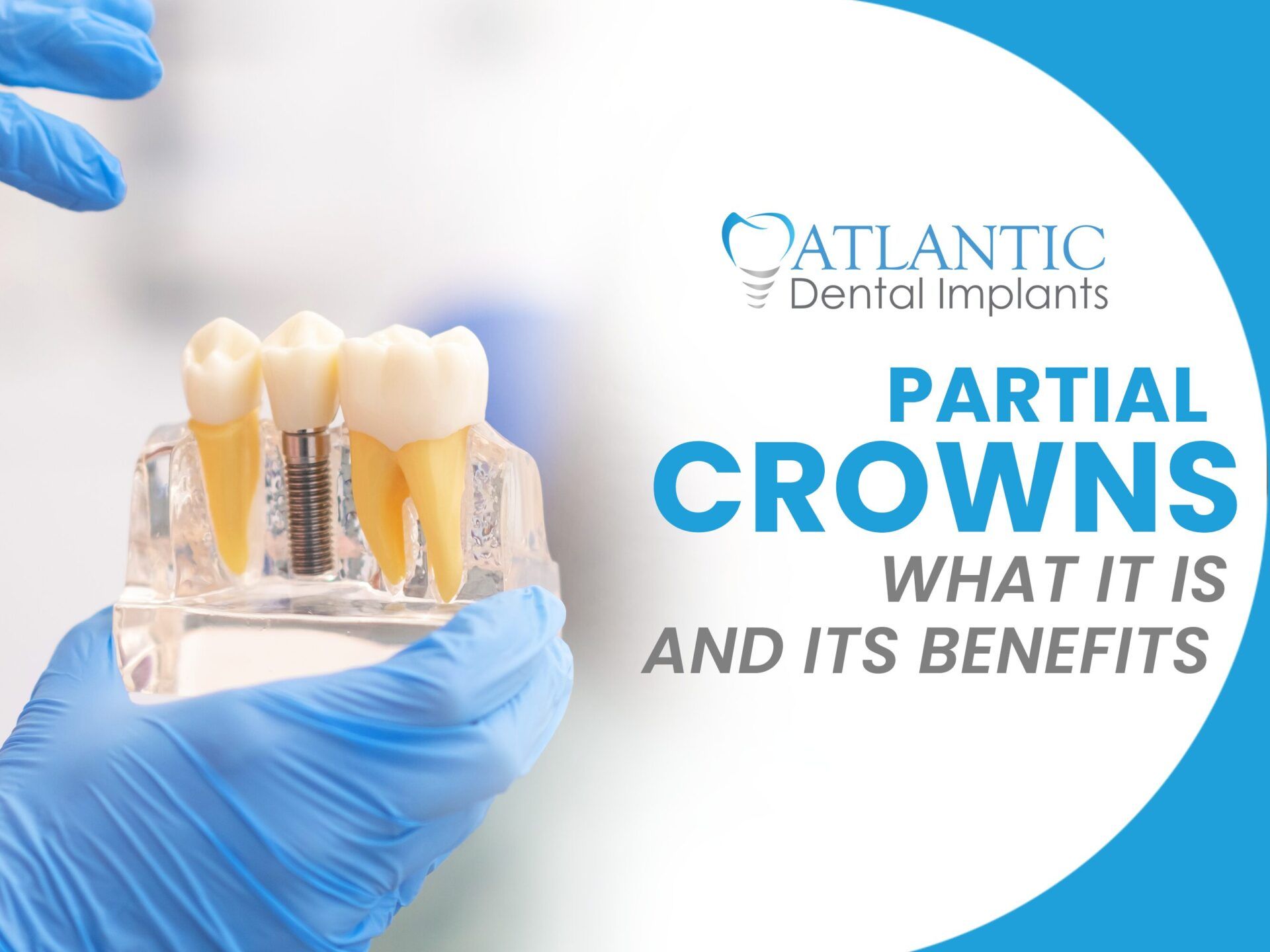
When it comes to dental restorations, there are numerous options available to address various dental issues. One such option is the partial crown, a versatile and effective solution for restoring damaged teeth. This article will provide a comprehensive guide on partial crowns, covering what they look like, the procedure involved, how they compare to fillings, their use for cracked teeth, and their role after a root canal. Understanding these aspects will help you make informed decisions about your dental health.
What Does a Partial Crown Look Like?
A partial crown, also known as an onlay or three-quarter crown, is designed to cover a portion of the tooth rather than the entire tooth, as a traditional crown does. Unlike full crowns, which encapsulate the entire tooth, partial crowns are used when the damage to a tooth is not extensive enough to require a full crown but too significant for a simple filling.
Partial crowns are custom-made to match the shape, size, and color of your natural teeth. They are typically made from materials such as porcelain, ceramic, or composite resin, which blend seamlessly with the surrounding teeth. The result is a restoration that is not only functional but also aesthetically pleasing. Because they are crafted to fit precisely, partial crowns restore the natural contour and strength of the tooth, allowing you to chew and speak comfortably.
Partial Crown Procedure
The process of getting a partial crown typically involves two visits to the dentist. Here’s a step-by-step overview of what you can expect during the partial crown procedure:
- Initial Examination and Preparation: During the first visit, the dentist will examine the affected tooth and take X-rays to assess the extent of the damage. If a partial crown is deemed appropriate, the dentist will prepare the tooth by removing any decayed or damaged areas. This preparation ensures a clean and stable base for the crown.
- Impression and Temporary Crown: After the tooth is prepared, the dentist will take an impression of the tooth and the surrounding area. This impression is sent to a dental laboratory, where the custom partial crown is fabricated. In the meantime, a temporary crown may be placed over the prepared tooth to protect it until the permanent crown is ready.
- Fitting and Bonding: Once the permanent partial crown is ready, you will return to the dentist for the fitting. The dentist will remove the temporary crown and place the permanent one, checking the fit and color to ensure it matches perfectly. If everything looks and feels right, the partial crown is bonded to the tooth using a strong dental adhesive.
- Final Adjustments: After the partial crown is bonded, the dentist will make any necessary adjustments to ensure your bite is comfortable and the crown fits seamlessly with your natural teeth. You will receive instructions on how to care for your new crown and maintain good oral hygiene.
Partial Crown vs Filling
When it comes to restoring damaged teeth, both partial crowns and fillings are viable options. However, there are distinct differences between the two, and the choice depends on the extent of the damage and the specific needs of the patient.
- Durability and Strength: Partial crowns are typically more durable and stronger than fillings. Because they cover a larger portion of the tooth, they provide better structural support and are less likely to fail under the pressure of chewing and biting.
- Coverage: Fillings are used to repair small areas of decay or damage within the tooth, while partial crowns cover a larger area, including the cusps of the tooth. This makes partial crowns suitable for teeth with more extensive damage that cannot be adequately restored with a filling.
- Aesthetics: Both partial crowns and fillings can be made from tooth-colored materials that blend with the natural teeth. However, partial crowns often provide a more seamless and natural appearance because they cover more of the tooth’s surface.
- Longevity: Partial crowns generally last longer than fillings, often providing many years of reliable service with proper care. Fillings, especially those made from composite resin, may need to be replaced more frequently.
Partial Crown for Cracked Tooth
A cracked tooth can be a painful and concerning issue, often requiring immediate attention to prevent further damage and alleviate discomfort. Partial crowns are an excellent solution for cracked teeth, offering both protection and restoration.
- Protection: When a tooth cracks, it becomes vulnerable to further damage and infection. A partial crown covers the cracked area, providing a protective barrier that prevents the crack from spreading and shielding the tooth from bacteria and debris.
- Restoration: Partial crowns restore the function and appearance of a cracked tooth. By covering the damaged area, they allow you to chew and speak without pain or difficulty, while also blending in with your natural teeth.
- Strengthening: The materials used for partial crowns, such as porcelain or ceramic, are strong and durable. They reinforce the cracked tooth, providing the structural support needed to prevent further damage and ensure the tooth remains functional.
Partial Crown After Root Canal
A root canal is a common dental procedure used to treat and save a tooth that is severely infected or damaged. After a root canal, the tooth can become brittle and more susceptible to breaking. A partial crown is often recommended to protect and restore the tooth following a root canal.
- Protection: After the infected or damaged pulp is removed during a root canal, the remaining tooth structure can be fragile. A partial crown provides a protective covering that prevents the tooth from breaking or becoming further damaged.
- Restoration: Partial crowns restore the function and appearance of a tooth after a root canal. They allow you to use the tooth normally for chewing and speaking, while also providing a natural and aesthetically pleasing appearance.
- Longevity: By covering and protecting the treated tooth, a partial crown can significantly extend its lifespan, ensuring that the benefits of the root canal are long-lasting.
Partial Crown vs Full Crown
In addition to comparing partial crowns with fillings, it’s also essential to understand the differences between partial crowns and full crowns. Both options have their advantages, and the choice depends on the specific needs of the patient.
- Coverage: As the names suggest, full crowns cover the entire tooth, while partial crowns only cover a portion. Full crowns are typically used for teeth that are extensively damaged or have undergone significant restorative work, such as after a root canal.
- Tooth Preservation: Partial crowns allow for more of the natural tooth structure to be preserved compared to full crowns. This can be beneficial for maintaining the tooth’s integrity and strength.
- Procedure: The procedure for placing partial crowns and full crowns is similar, involving tooth preparation, impression taking, and fitting. However, full crowns may require more extensive preparation of the tooth.
- Aesthetics and Comfort: Both partial and full crowns can be made from materials that blend with your natural teeth. The choice between the two often comes down to the extent of the damage and the recommendation of your dentist.
Benefits of Partial Crowns
Partial crowns offer numerous benefits, making them an excellent choice for many dental restoration needs:
- Aesthetically Pleasing: Partial crowns are designed to match the color, shape, and size of your natural teeth, providing a seamless and natural appearance.
- Durable and Long-Lasting: Made from strong materials like porcelain or ceramic, partial crowns are durable and can last for many years with proper care.
- Preserve Tooth Structure: Unlike full crowns, partial crowns preserve more of your natural tooth structure, which can be beneficial for the overall health of the tooth.
- Versatile: Partial crowns can be used to address a variety of dental issues, including decay, cracks, and post-root canal restoration.
Get Your Dental Procedures At Atlantic Dental Group
Partial crowns are a versatile and effective solution for restoring damaged teeth. Whether you are dealing with decay, a cracked tooth, or need a restoration after a root canal, partial crowns offer a durable, aesthetically pleasing option that can enhance your dental health and quality of life.
If you are considering a partial crown or need advice on dental restorations in Whittier, CA, Atlantic Dental Group is here to help. Our team of experienced professionals is dedicated to providing top-quality dental care and ensuring that your experience is comfortable and stress-free. Contact Atlantic Dental Group today to schedule a consultation and discover how partial crowns can benefit you.



Leave a Reply